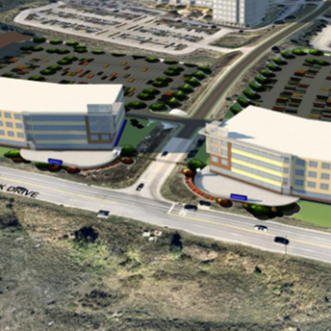
CEC performs topographic surveys, civil engineering and architectural services to provide recommendations for buildings and site infrastructure to facilitate compliance with the most current American with Disabilities Act (ADA) criteria.
With most buildings and surrounding property required to comply with the ADA, CEC’s engineers and architects provide a comprehensive approach to ADA compliance evaluations and remedial requirements. ADA criteria are unique and can vary according to property use, local and/or state building codes and public access requirements. As such, the ADA requires a complete understanding of site development and building construction as well as the potential costs associated with compliance or remediation.
Typical exposure to property owners and developers includes, but is not limited to, the following:
- Accessible routes
- Parking spaces and aisles
- Building entrances and exits
- Hallways and lobbies
- Exterior pedestrian access and paths of travel
- Curb and exterior ramps
- Drainage structures, including storm inlets
- Passenger loading zones
- Reception areas
- Interior areas
- Off-site access from public transportation
- Signage
- Restrooms
Parking Lot Layout and ADA Accessibility
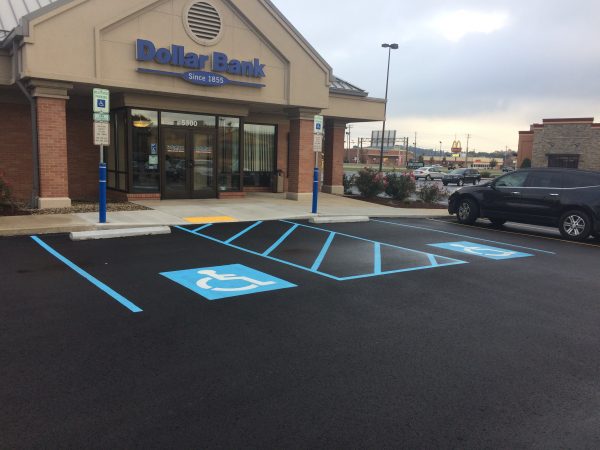 CEC evaluates site parking fields relative to current federal and state/local ADA criteria, including the number/type of accessible spaces, loading aisle and accessible path criteria, maximum gradients and curb ramps.
If pavement rehabilitation is required to meet compliance, this provides a unique opportunity to upgrade the parking lots and roadways in an economical manner to meet local zoning requirements, state Department of Transportation requirements, and/or ADA criteria.
Using topographic survey information for the ADA parking fields, accessible paths and curb ramps, site gradients and dimensional features are analyzed with reports and figures prepared highlighting the non-compliant ADA features and providing recommendations to address areas of concern. Plans and specifications detailing the remediation for any required construction include demolition plans, pavement remediation plans, site improvement plans (including new/revised curbing, sidewalks, curb ramps, etc.), grading plans with spot elevations specific to ADA features, restriping plans, and detail sheets.
Building Structures and ADA Accessibility
CEC offers clients variable levels of ADA due diligence ranging from cursory to full ADA surveys and estimates to remediate ADA accessibility deficiencies, including:
Tier I (Visual) Accessibility Survey
CEC’s basic walk-through survey includes a limited scope visual survey which does not involve the taking of measurements or counts.
The five areas covered in this level of survey include:
- Path of Travel
- Parking
- Public Toilet Rooms
- ADA Compliant Guestrooms (for hospitality use facilities, such as hotels)
- Elevators
A typical Property Condition Assessment (PCA) scope of services includes a Tier I Survey and an order-of-magnitude estimate to remediate observed deficiencies.
Tier II Survey
Tier II ADA surveys are an abbreviated survey that uses representative sampling without detailed measurements or counts.
A Tier II survey augments the Tier I scope by asking a series questions for the following areas:
- Building History
- Parking
- Ramps
- Entrances/Exits
A Tier II survey may also involve measurements or counts within a limited area of a given property, such as an accessible parking area near a building entrance.
Tier III Survey
A Tier III Survey typically involves a full, in-depth survey of a property in full compliance with the ADA and 2010 ADA Accessibility Guidelines (ADAAG). This survey is intended to address each accessible element and space within a facility, and involves the taking of measurements and counts. Tier III survey also includes an estimate to remediate identified accessibility-related deficiencies. A Tier III survey may be combined with a PCA, or issued as a separate report.