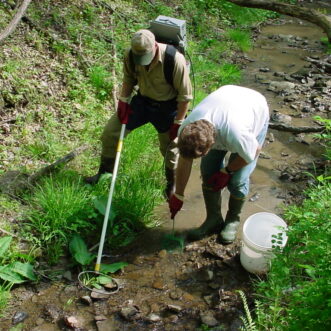
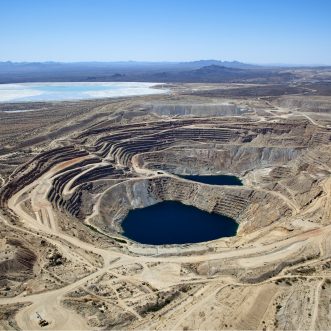
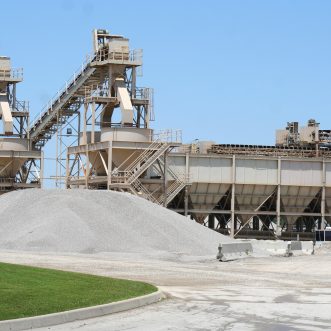
To help mining companies navigate complex air regulations, CEC completes projects related to major and minor source permitting, compliance demonstrations and reporting, testing and monitoring of point and fugitive air emission sources, air dispersion modeling, and greenhouse gas evaluations.
CEC provides comprehensive air quality consulting services to help mining companies navigate and comply with complex and overlapping federal, state, and local air quality regulations. CEC’s experts work broadly across the industry for producers of aggregates, industrial minerals, coal, hard rock, clay, asphalt, cement, and lime.
Emission Inventory Development
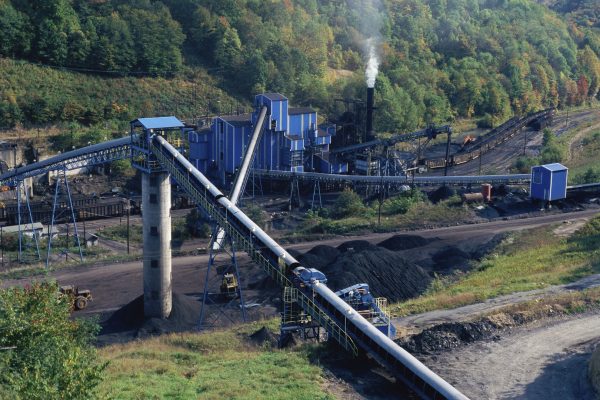
Complete emission source information is crucial for regulatory applicability determinations, permitting, compliance evaluations and demonstrations, periodic reporting, modeling studies, and other air quality studies. CEC is experienced in developing emission inventories and calculating emission rates of criteria and hazardous air pollutants (HAP). CEC uses published emission factors, site-specific engineering calculations, specialized modeling software, field measurements, and source testing methods to characterize the type and magnitude of emissions based on production capacities, equipment specifications, vendor data, and site-specific information.
Air Quality Monitoring
CEC deploys ambient air monitoring and meteorological instruments at mines and industrial plant sites for a variety of uses: pre- and post-construction monitoring, information collection requests (ICRs) from U.S. EPA, national ambient air quality standard (NAAQS) compliance demonstrations, complaint mitigation efforts, and internal fence line monitoring studies. CEC’s expert staff also has experience with industrial hygiene monitoring, including OSHA industrial air concentration standards, sound level studies, and personal dust and silica exposure monitoring.
Permitting and Compliance
CEC has experience preparing minor and major source construction permit applications, state and local minor source operating permits, permits by rule, general permits, and new and renewal Title V operating permits applications. CEC is proficient in the most complex of these permitting requirements, including Prevention of Significant Deterioration (PSD) and Nonattainment New Source Review (NANSR) permits. CEC helps mining companies determine the applicable regulatory requirements, develop practical and effective permitting strategies, and negotiate with agencies to obtain acceptable permit conditions.
CEC staff interpret permit requirements to assist mining companies with recordkeeping tasks, emissions calculations, test planning and scheduling, and completing reports. CEC’s air quality project managers maintain working relationships with local air agency personnel that can be beneficial in mitigating enforcement actions when they occur.
Dispersion Modeling
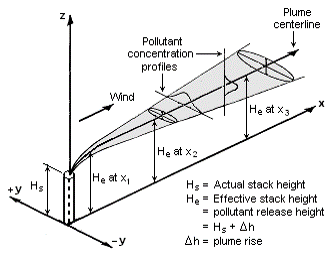
CEC has significant experience in the application of U.S. EPA’s increasingly complex preferred air dispersion models, as well as alternative, specialty, and screening models. CEC integrates expertise in the application of air dispersion models and interpretation of Appendix W Guidelines with expertise in air quality permitting, compliance, monitoring, and testing management services to deliver state-of-science tools for planning, process optimization, responses to accidental releases, risk mitigation and risk assessment litigation, assistance in project design, and unique applications.
Air dispersion modeling applications include demonstration of compliance with NAAQS, PSD major source permitting, off-site impact and deposition studies, fatal flaw and feasibility analyses for project siting, support for National Environmental Policy Act (NEPA) Environmental Assessment/Environmental Impact Statements, and odor concentration studies.
Control System Evaluations
The need for control equipment and systems runs throughout the various air regulations applicable to mining facilities and operations. Selection of the most appropriate control strategy combines the need to meet applicable requirements, cost of equipment and operation, short-term vs. long-term process needs, future expansion plans, and other considerations. CEC engineers work with clients to identify, select, and evaluate the control options that best meet a facility’s needs. This can be optimization of current equipment or evaluations for new project requirements, such as the determination of best available control technology (BACT) or lowest achievable emission rate (LAER) control systems to support PSD or NANSR applications, respectively. CEC’s experience with a variety of control systems can also help facilities meet state and local regulations for reasonably available control technology (RACT) or HAP standard requirements for maximum achievable control technology (MACT).