CEC provides engineering, consulting and permitting services for deep well disposal and reuse treatment facilities.
CEC’s extensive experience with specialized management of flowback and produced brine fluids includes the design and permitting of deep well injection and reuse treatment facilities for the oil and gas production industry.
Some of the fluid management options include deep well disposal, treatment for reuse or zero liquid discharge, or any combination. Each option must consider the economics of disposal versus treatment facility, transportation and piping logistics, peak water use and flowback requirements, water treatment complexities, permitting considerations (including zoning requirements), and siting restrictions.
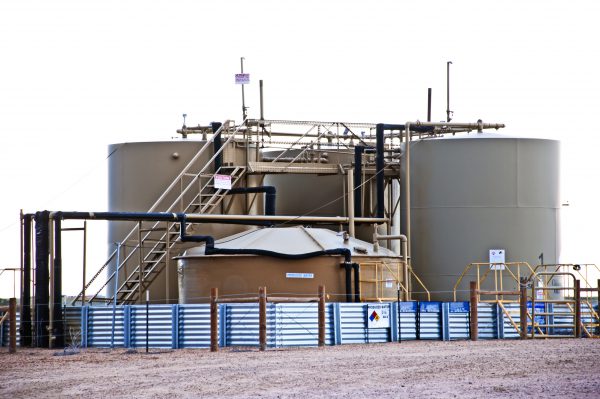 For deep well injection, geologic analysis must also be evaluated and considered in economic modeling. Consideration is given to each particularity through all project phases, including siting studies, conceptual plan development, permitting, and construction-level design. Services include the following.
- Site Selection and Due Diligence Studies
- Cost Estimating/Feasibility Evaluations
- Process Design and Treatability Studies
- Conceptual Design and Preliminary Engineering
- Equipment Options
- Geotechnical Engineering
- State Permit Preparation (Disposal Well and Facility Permits)
- Background Environmental Studies (Soils and Groundwater)
- Operational and Emergency Contingency Plans
- Waste Tracking and Characterization Procedures
- Records Management Procedures
- By-product Management Plans (Including Radiologicals)
- Construction Observation and Commissioning
Design Considerations
- Disposal or Reuse Goal
- Zoning and Regulatory Siting Restrictions
- Transportation and Piping Logistics
- Environmental Protection, Community Relations, and Job Creation
- Disposal Well Treatment Options
Concept to Completion
CEC’s planning and design services result in deep well disposal and reuse treatment facilities that:
- Provide short- and long-term operational flexibility with the capability to respond to changes in business conditions;
- Meet federal, state, and local regulatory requirements;
- Provide efficient operational processes; and
- Minimize maintenance efforts and are durable.


