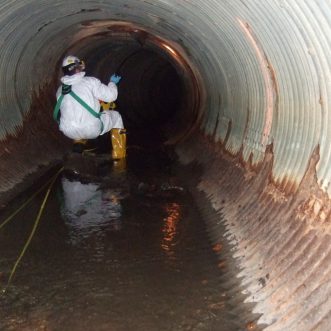
Civil & Environmental Consultants, Inc. (CEC) utilizes the latest technologies to detect water loss for municipal clients. Our staff can identify leaks using equipment that is specific for each job.
The United States loses two trillion gallons of treated drinking water each year from water main breaks that are often caused by undetected leaks. Reducing leakage can help alleviate water shortages by mitigating losses and increasing the ability of the water provider to adequately anticipate water needs, leading to a more resilient water system that is better able to withstand, adapt to, and recover from disruption.
CEC utilizes leading technologies to localize, locate, and pinpoint leaks within a water system to aid in better control of water loss. Equipment needs are based on the size, condition, and materials of the client’s existing water system.
Leak detection methods may include any one or all of the following steps:
Localization
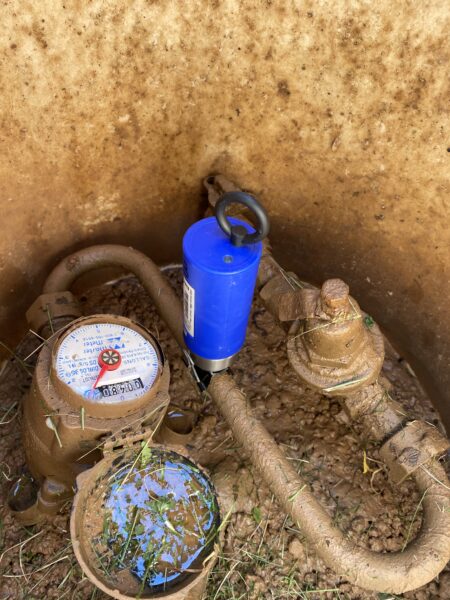
Noise loggers are acoustic-based sensors placed either on the outside of pipes or through a valve in water. Loggers can be placed temporarily and moved to analyze an entire system or placed permanently to continuously monitor a specific area. Sensors listen for the high-frequency signature of leaks. Loggers may be scheduled to run scans during low-use hours to minimize acoustic interference.
Locating
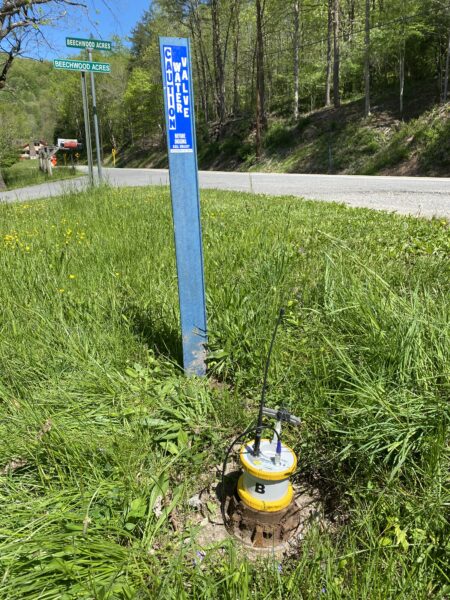
Correlating equipment locates leaks in drinking water pipes. Pressurized water at the leak location creates a noise that travels out in all directions of the pipe. This noise is recorded, amplified, and sent wirelessly to the correlator by two sensors (piezo microphone, hydrophone) which are attached to the pipe (e.g. valve, hydrants). The correlators compare both signals and calculate the exact distance to the leakage based on the delay time of the signals, the sensor spacing, and the sound velocity in the pipe.
Pinpointing
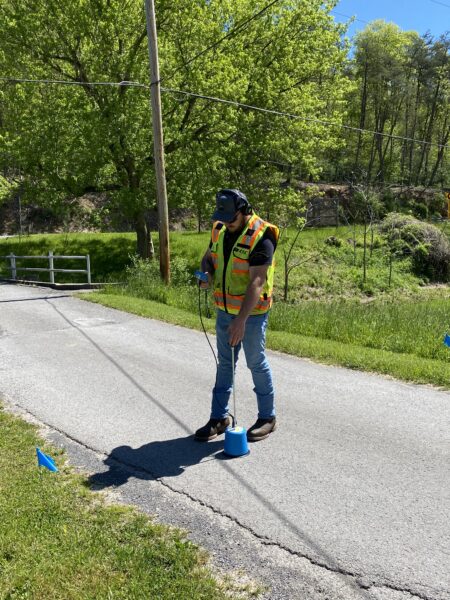
The water that is escaping directly at the leak location generates noise which is transmitted through the ground to the surface. A ground microphone picks up the noise and graphically displays the volume and the frequency spectrum. Inside the pipe, the escaping water generates a pressure wave. You can hear this pressure wave as leakage noise with the ground microphone and an attached sensor rod microphone, even at remote contact points of the pipe (valves, hydrants, hose connections, etc.).