CEC’s comprehensive air quality consulting services support airport managers and developers navigating and complying with complex and overlapping federal, state, and local air quality
regulations.
CEC’s air quality staff guide projects efficiently through regulations. Specific air quality services for airport development and ongoing operations include the following:
Emission Inventory Development
Complete emission source information is crucial for regulatory applicability determinations, permitting, compliance evaluations and demonstrations, reporting, modeling studies, and other air quality studies. CEC is experienced in developing emission inventories and calculating emission rates of criteria, hazardous air pollutants, (HAP) and greenhouse gas emissions. To characterize the type and magnitude of emissions, CEC uses:
- emission factors
- site-specific engineering calculations
- specialized modeling software
- field measurements
- approved source testing methods
Characteristics are based on equipment specifications, operational parameters, manufacturer data, and other site-specific information. The need for quality emissions determinations is magnified for public facilities because the data and analyses require transparency at all stages.
Ambient Monitoring
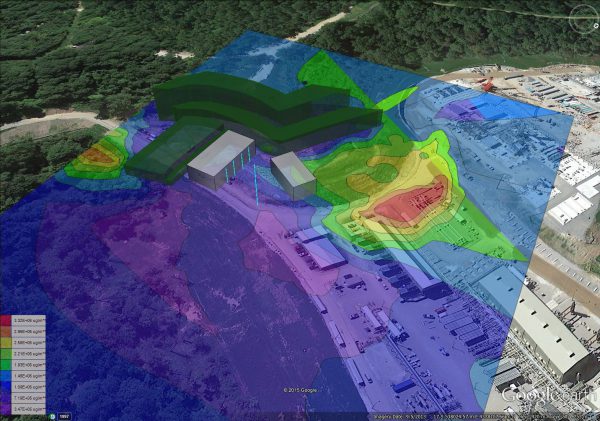
CEC can deploy ambient air monitoring at airports and the surrounding areas to address concerns of the public regarding off-site impacts from airport operations. Other required monitoring programs may also include pre- and post-construction monitoring, information collection requests (ICRs) from the U.S. EPA, National Ambient Air Quality Standards (NAAQS) compliance demonstrations, complaint mitigation efforts, and internal fence line monitoring studies. CEC also has experience with industrial hygiene monitoring, including OSHA industrial air concentration standards and sound level studies.
Permitting and Compliance
CEC has experience preparing minor and major source construction permits, state and local minor source operating permits, permits by rule, general permits, and new and renewal Title V operating permits. CEC is proficient in the most complex of these permitting requirements, including Prevention of Significant Deterioration (PSD) and Nonattainment New Source Review (NNSR) permits. To obtain acceptable permit conditions, CEC helps airports to:
- determine the applicable regulatory requirements
- develop practical and effective permitting strategies
- negotiate with agencies, site support contractors, developers, and associated airline facilities
Our experience in this arena greatly assists airports that have limited environmental staff to come to workable terms efficiently, since time is an important constraint. CEC can interpret permit requirements to assist airport management with emissions calculations, test planning and scheduling, recordkeeping tasks, and completing reports. Our air quality experts maintain beneficial working relationships with local air agency personnel, which can be helpful in mitigating enforcement actions if they occur.
Dispersion Modeling
Keeping the public informed regarding complex issues, such as air quality impacts, is always challenging. To help defuse an otherwise sensitive issue, CEC uses modeling to predict emissions and to demonstrate compliance during early project phases.
Air dispersion model applications include demonstration of compliance with the NAAQS and Prevention of Significant Deterioration (PSD) major source permitting. Off-site impact and deposition studies, fatal flaw and feasibility analyses for project siting, support for National Environmental Policy Act (NEPA) Environmental Assessment/Environmental Impact Statements, and odor concentration studies also employ modeling analysis.
We integrate diverse expertise in the application of air dispersion models and interpretation of federal and state guidelines. CEC has a proven record of performance in air quality permitting, compliance, monitoring, and testing management services to deliver state-of-science tools for planning, process optimization, responses to accidental releases, risk mitigation and risk assessment litigation, assistance in project design, and other air quality applications.