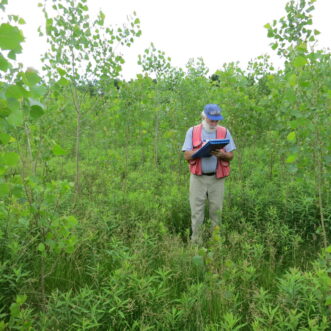
CEC offers a comprehensive suite of services to assist with avian surveys and management, as well as with Migratory Bird Treaty Act compliance. Our experience and expertise allow us to provide seasoned advice to our clients, enhancing their ability to effectively and efficiently complete their projects.
CEC’s wildlife biologists and ornithologists have the experience, expertise, and qualifications to provide comprehensive regulatory and technical support nationwide regarding avian issues. CEC brings specialized expertise in navigating the potential issues associated with the interaction between avian species and industrial facilities. From passive modification techniques to monitoring and adaptive management programs, CEC has the knowledge to support clients with avian-friendly design standards, building guidelines, and operational protocols that meet industry-specific requirements.
Avian Surveys
 CEC biologists are proficient in a wide variety of avian survey methodologies, allowing the selection of site- and species-specific survey protocols, including diurnal and nocturnal survey protocols. Surveys can provide valuable information on biodiversity, justifying the ecological value of an area, or determining specific population information for threatened and endangered species. Avian surveys are important to our clients—from airports managing potentially hazardous wildlife, to wind farms and power transmission companies minimizing impacts to eagles, to industrial facilities protecting migratory bird species.
Migratory Bird Treaty Act Compliance
The Migratory Bird Treaty Act (MBTA), enacted in 1918, and amended through international treaties several times, prohibits take (including killing, capturing, selling, trading, and transport) of protected migratory bird species without prior authorization by the U.S. Fish and Wildlife Service. The complete list of protected species is found in the Code of Federal Regulations, and represents those migratory bird species that are native to the U.S. or its territories.
CEC ornithologists have extensive experience navigating the regulatory issues associated with MBTA compliance, including determining the presence or absence of potentially rare species in a project area, the assessment of habitat values, the quantification of population abundance and distribution, and the ability to negotiate and secure any required permits (including the development of associated impact mitigation). Through project-specific experience with these issues, CEC has the specialized in-depth knowledge to guide our clients through this process.
Personnel Experience
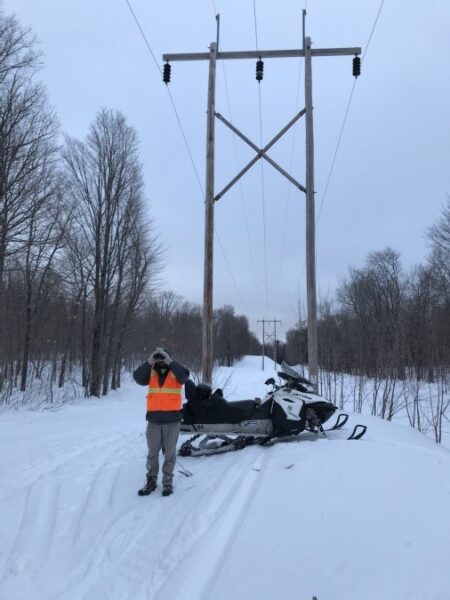 Our experts have worked on projects ranging from large utility-wide habitat conservation plans (HCPs) to small individual projects. CEC team members have built an excellent rapport with local, state, and federal regulators, including the U.S. Fish and Wildlife Service, by leading state and regional efforts to develop species-specific recovery plans and conservation agreements. Additionally, our professionals have provided technical expertise and assistance to help some of the largest utilities in the U.S. develop and implement Avian Protection Plans (APPs). While providing those services, our staff were able to stay informed on the latest issues facing the electric utility industry and the Avian Power Line Interaction Committee (APLIC).
Technology
CEC’s innovative data management professionals have developed a tablet application to enhance field data collection, allowing personnel to directly input data in real time while improving quality control and data analysis. Reports are delivered to regulators and clients faster, speeding up the regulatory process.