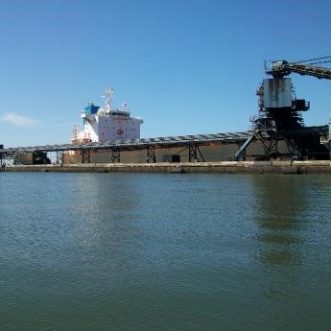
Barge offloading and mooring facilities in Ohio require authorization from the U.S. Army Corps of Engineers and Ohio EPA prior to constructing or operating on any waters in the state of Ohio. Existing facilities that lack these authorizations risk enforcement actions, which may include penalties and ceasing operations.
Transporting large quantities of materials, using vessels such as barges and complemented with tug or tow boats, is often more cost-effective and more environmentally friendly than transportation by highway or rail. The transfer of bulk product materials requires a specific arrangement between the shoreline and the water, as well as the equipment to transfer the product.
CEC conducts on-site evaluations and assessments at client facilities to identify approaches or suggestions for continued operation or to discuss modification aimed at increased product delivery, loading and offloading processes, and/or to improve safety. Understanding that capital improvement costs subtract from the “bottom line” at these facilities, CEC’s ideas utilize value engineering approaches designed to consider existing topographic and bathymetric features and site conditions.
CEC also evaluates shoreline areas adjacent to waterfront structures to identify locations where shoreline erosion, unstable banks, or sediment buildup could create issues with river traffic.
Section 401/404 Clean Water Act (CWA) Permitting
 Section 401 and 404 authorizations from the United States Army Corps of Engineers (USACE) and Ohio Environmental Protection Agency (Ohio EPA) are required prior to the placement of any material, including dolphins, bank armor and loading ramps below the Ordinary High Water Mark of any jurisdictional stream or river. In most cases, this permit must include consideration of threatened and endangered species, watershed specific authorizations from the Director of the Ohio EPA, sediment and erosion control plans, and local riparian setbacks.
Rivers and Harbors Act – Section 10
Larger streams, lakes, or rivers capable of supporting navigation are regulated under Section 10 of the U.S. Rivers and Harbors Act. A Letter of Permission (LOP) from the USACE is required prior to building or operating on such navigable waters. This LOP must include a Facility Operating Plan (FOP), which includes information such as barge dimensions, high water contingencies, and specific information confirming the facility will not impair navigation for other vessels on the waterway.
Request and Negotiation Assistance
CEC can assist with After-the-Fact (ATF) notification and authorization requests under CWA Section 404/401 NWP No. 39 to maintain fill material located within the Ohio River. CEC has experience working with USACE for successful negotiation of similar permits and operations.
Waterfront Industrial Facilities Services
CEC offers an array of design, maintenance, and rehabilitation services for waterfront structures such as piers, wharves, jetties, quays, and docks used for industrial operations located along river and lakefronts or at ocean harborfronts.