CEC provides complete human health and ecological risk assessment services to commercial, industrial, manufacturing, and utility clients with a focus on incorporating real-world assumptions. Our cost-effective remedial actions are protective of human health and the environment.
Risk assessments are commonly performed as part of commercial and industrial real estate transactions, brownfields redevelopment projects, state voluntary clean-up projects, and federal CERCLA and RCRA programs.
Human Health Risk Assessments
 CEC’s overall human health risk assessment approach integrates four primary components:
- Hazard identification – selection of chemicals that have the potential to cause an adverse effect
- Exposure assessment – identification of current and future receptors and complete exposure pathways
- Dose-response assessment – description of the relationship between chemical dose and the likelihood of an adverse response
- Risk characterization – presentation of risk estimates and the uncertainties associated with these estimates
Specific services may include one or a combination of the following:
- Screening large datasets against state and/or federal standards
- Developing a conceptual site exposure model
- Calculating exposure point concentrations using U.S. EPA’s ProUCL software
- Assessing potential vapor intrusion using the Johnson & Ettinger model or other appropriate models
- Estimating non-cancer effects and potential cancer risks
- Calculating human health risk-based standards or clean-up goals
- Preparing Risk Assessment work plans and reports in accordance with state and federal requirements
Ecological Risk Assessments
The ecological risk assessment approach typically has the following components:
- Problem formulation – establishing goals and focus of the risk assessment, developing the conceptual model, and assessment/measurement endpoints
- Exposure analysis – developing profiles of environmental exposure and the effects of the stressor
- Risk characterization – presenting an overall estimate of risk and discussion of confidence in the assessment and interpretation of ecological significance
Services may include one or a combination of the following:
- Screening-level ecological risk assessments
- Baseline ecological risk assessments
- Problem formulation, exposure and effects assessments, risk characterization, and uncertainty analyses
- Identifying stressors, ecosystems potentially at risk, and known effects
- Selecting receptors, assessment endpoints, and measurement endpoints
- Screening data against toxicity reference or benchmark values
- Developing a conceptual site exposure model
- Use of field studies and toxicity tests as appropriate
- Calculating ecological risk-based levels and cleanup goals
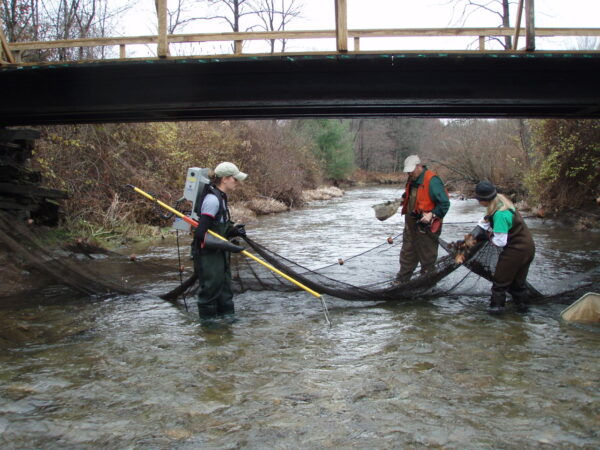
- Collecting terrestrial receptors (earthworms and insects), aquatic receptors (insects and fish), and plants for analysis
- Cause-and-effect studies of benthic macroinvertebrate populations in response to potential contaminants/stressors
- Natural resource damage assessments
- Due diligence support