CEC’s Sanitary Sewer Evaluation Survey (SSES) service utilizes various equipment and techniques to evaluate the existing condition of the sanitary sewer infrastructure and generate a report that identifies defects, blockages, failures, and capacity problems. These techniques include smoke testing, dye testing, closed circuit TV (CCTV), flow monitoring, rain monitoring, and flow isolation. As problems are identified, CEC’s professional engineers will determine if the sewer lines or manholes are in need of immediate repair or replacement and will work with the client to develop an improvement plan based on current or future utility budgets.
The successful completion of a SSES investigation and potential future improvement project(s) will provide clients and their customers the infrastructure necessary to reduce overall operation and maintenance costs while improving the ability to more effectively operate and maintain the wastewater collection and treatment system. The SSES study is the first step in evaluating a client’s aging sewer system and reducing or eliminating sewer backups and reducing the peak wet weather flow to the wastewater treatment plant. Through the efforts of the SSES manholes and sanitary sewer lines within a study area or system wide will be inspected for cracks, collapses, and blockages. After an extensive investigation and documentation of defects is completed, a rehabilitation plan will be developed, identifying necessary sewer system repairs. In some situations, immediate repair may be recommended.
The four most common methods being used to survey the sewer lines are:
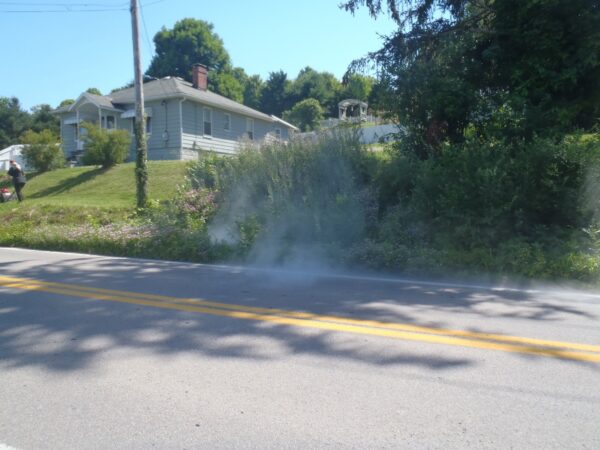 Smoke Testing
- Consists of blowing artificial smoke “vapor” into the sanitary sewer system and observing where the smoke exits the system, in order to locate deficiencies and areas of potential inflow and infiltration
- Dye Testing
- Florescent dye is inserted into a downspout or drain and flushed down the pipe. The water turns a bright, fluorescent green and can be easily spotted if it reaches the sanitary sewer and passed through a downstream manhole.
- CCTV (Closed Circuit Television)
 The process of using a camera to see inside of pipelines, sewer lines, or drains. CCTV cameras assist with identifying blockages, bellies, sags, cracks, illegal connections, or root infiltration without needing to conduct more invasive methods like excavation.
- Flow Monitoring
- Involves installing a network of flow meters and rain gauges at strategic locations within the sewer system for a specific duration. Collected data are analyzed to develop flow characteristics under dry- and wet-weather conditions at the metered locations.