CEC Ecological Sciences botanical team, led by Kyle Filicky, PWS, CERP, discovered a new Pennsylvania element occurrence of Meehan’s mint (Meehania cordata).
The Pennsylvania Department of Natural Resources and Conservation (PA-DCNR), Pennsylvania Natural Heritage Program (PNHP) and NatureServe assign Meehan’s mint as Critically Imperiled (State Rank 1). This species is classified as critically imperiled due to limited potential suitable habitat within southwestern Pennsylvania and ranges within one to five known occurrences.
CEC botanists conducted a non-growing season botanical survey in February 2026. During the survey, the team identified approximately 1,100 Meehan’s mint individuals within the approximately 52-acre project area. Due to the proposed project activities, approximately 35 Meehan’s mint individuals were proposed to be relocated by CEC. PA-DCNR approved the proposal to relocate the plants to suitable habitat areas where the permitee will continue monitoring these plants for the next three years.
What is Meehan’s mint (Meehania cordata)?
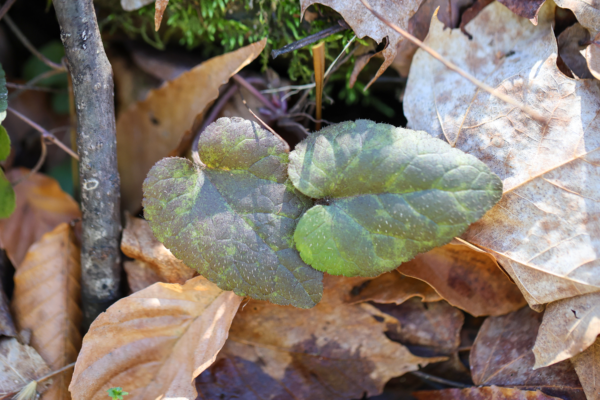
In Pennsylvania and North America, this is the only species in the genus Meehania. Worldwide, there are six additional species of Meehania, which are all native and occur in east to southeast Asia.
Meehan’s mint can be identified by the following key characteristics (Meehania cordata (Meehania) – FSUS):
- Deciduous, herbaceous perennial that spreads across the ground
- Oppositely arranged, heart-shaped (cordate) leaves
- Leaflets are hirsute (stiff hairs) on the surface
- When mature enough, each stem produces stolons (new rooted plants)
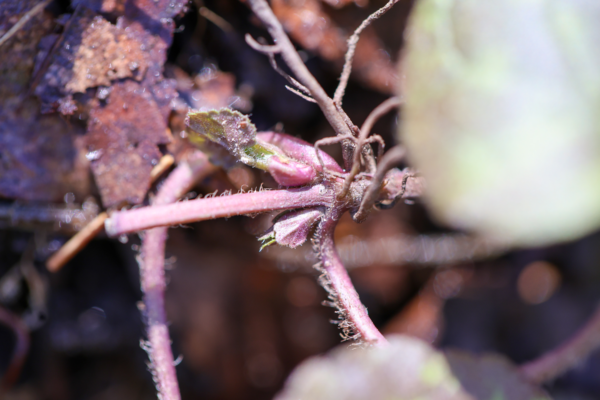
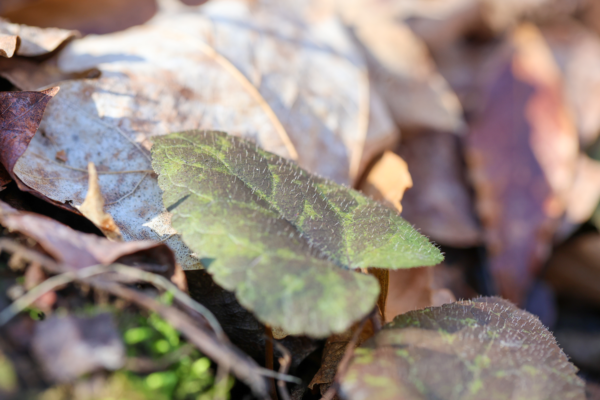
Meehan’s mint is documented to occur in eight states within the mid-Atlantic to midwestern regions of the United States. It is protected within four of these states due to a decrease in potential suitable habitat loss such as land-use conversion and habitat fragmentation. This species prefers shaded, moist to dry rich woodlands and mature forests.
In Pennsylvania, this species is limited to southwestern Pennsylvania, where it is at the northern extent of its range.
A Hide and Seek Botanical Survey
Due to an accelerated project timeline, CEC botanists requested to conduct a non-growing season botanical survey for Meehan’s mint, as this species can be identified during the non-growing season. After receiving PA-DCNR approval, Kyle and CEC botanists, Alex Casile along with ecologists Shawn French and Jackie Rockey conducted the botanical survey throughout the 52-acre project area in February 2026. During the survey, approximately 1,100 Meehan’s mint individuals were identified within the project area. Of these, 36 were observed within the limits of disturbance (LOD). Due to the time of year and growth form of Meehan’s mint, CEC botanists implemented an unconventional survey method. A battery-powered leaf blower was utilized to carefully remove the duff layer (fallen leaf coverage) to expose Meehan’s mint individuals.
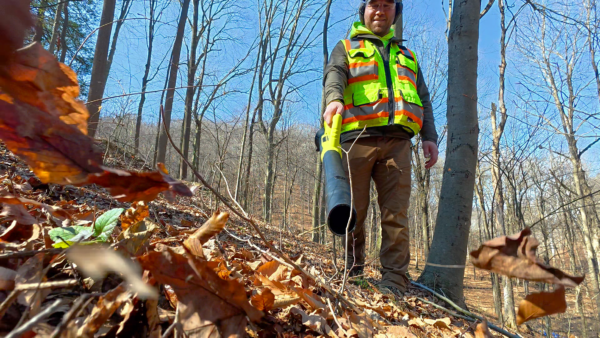
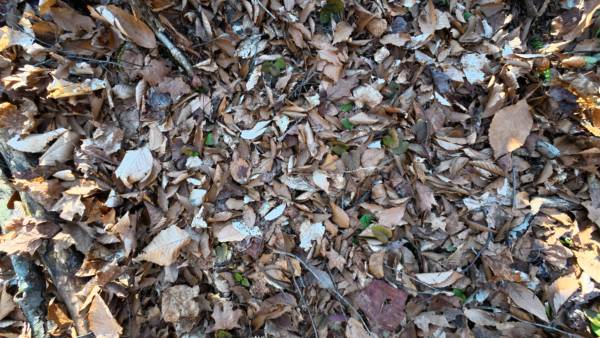
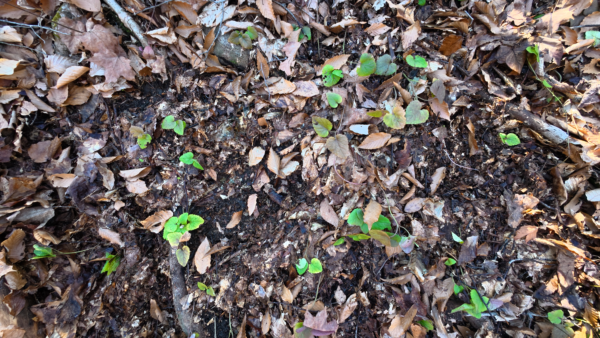
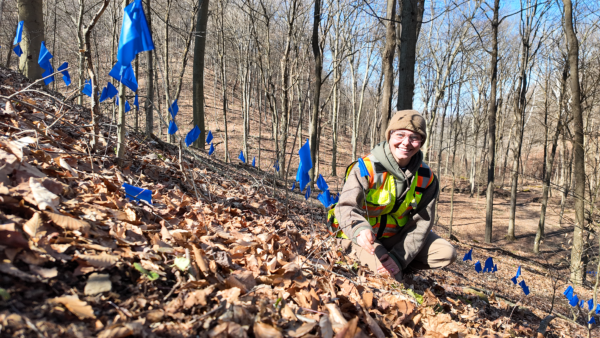
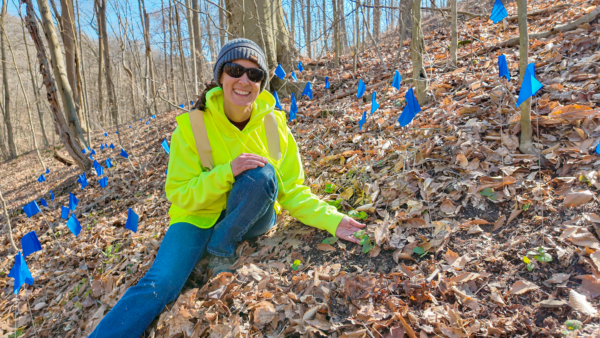
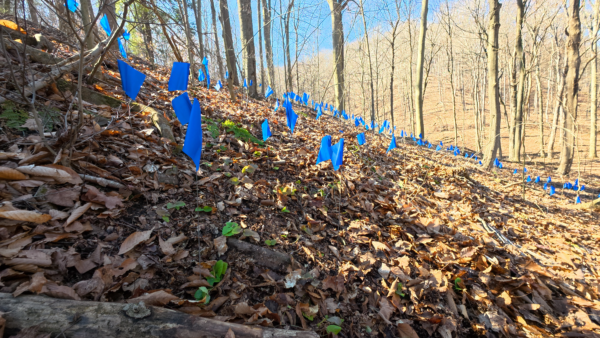
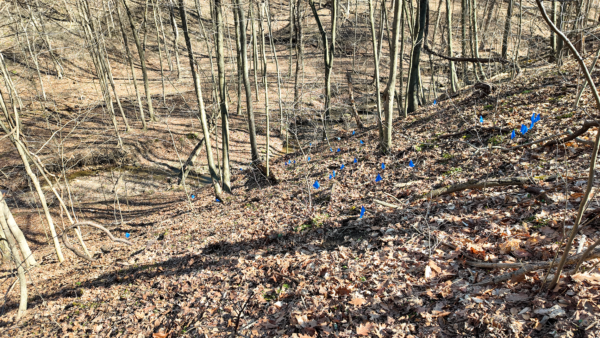
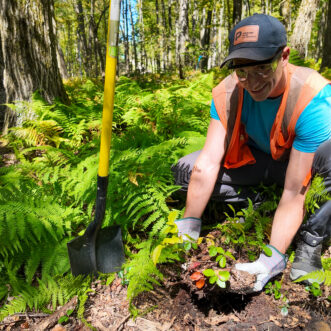
CEC’s botanists and ecologists team comprised of Kyle, Shawn, and Kathleen Grkman successfully relocated all 36 Meehan’s mint individuals by adapting best relocation practice methods to encourage successful survivability. These best practice methods included:
1. Hand trowels were used to excavate Meehan’s mint individuals. Due to the growth form of Meehan’s mint, excavation holes were dug approximately 4 to 6 inches horizontally from a centroid point and approximately 4 to 6 inches vertically to preserve the lateral root system and rhizomes.
2. A root wash station was used to remove invasive lesser celendine (Ficaria verna) plant material from each Meehan’s mint excavated individuals. In some instances, lesser celendine roots would be entangled with Meehan’s mint roots.
3. The excavated and washed Meehan’s mint individuals were staged and transported to each relocation area in a 5-gallon bucket with approximately 4 inches of water.
4. At each plot, hand trowels were used to temporarily remove the duff layer and excavate an area to accommodate each Meehan’s mint individual.
5. Once planted in each hole, the Meehan’s mint individuals were packed into place using access soil and the duff layer was gently replaced.
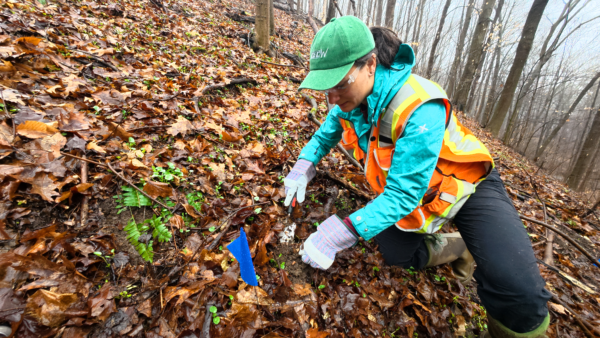
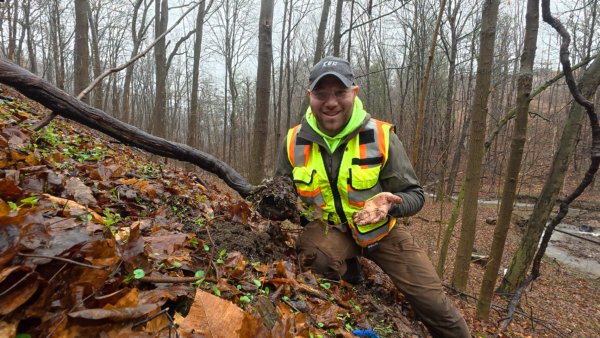
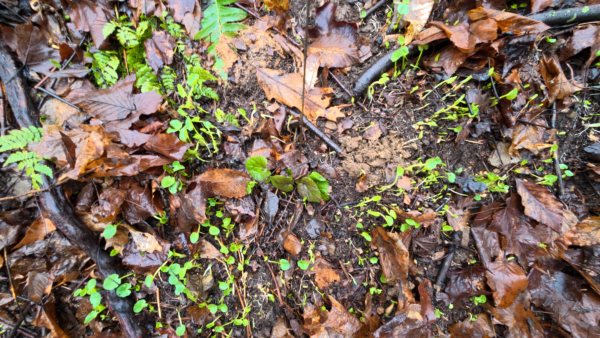
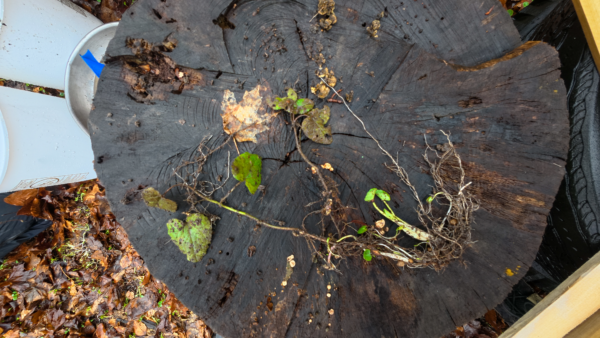
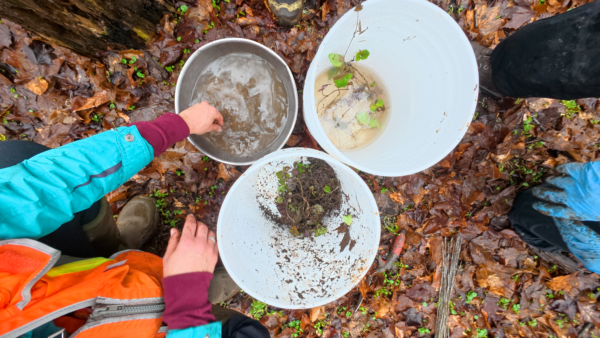
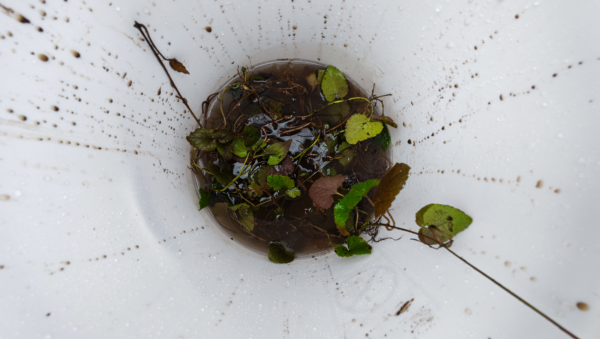
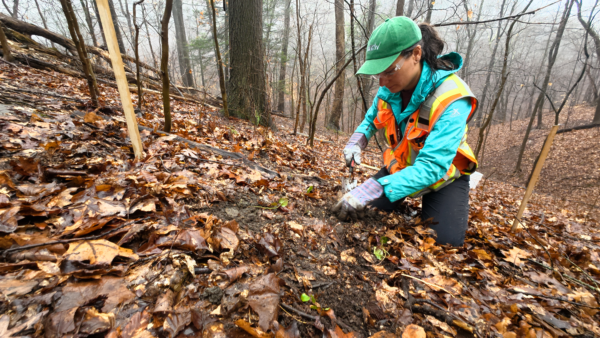
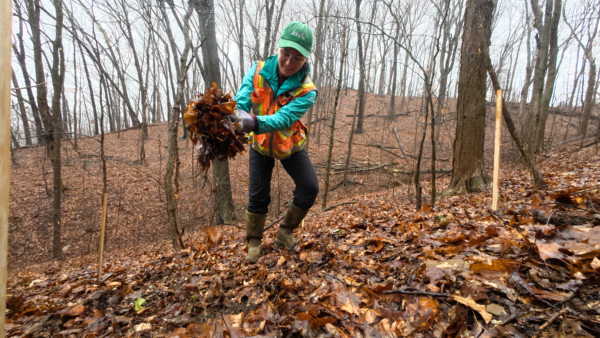
The relocation sites were chosen based on their soil composition, light regime, and associated characteristic species found within the Meehan’s mint original population. CEC botanists selected two relocation plots that were comprised of the original habitat type that supported Meehan’s mint.
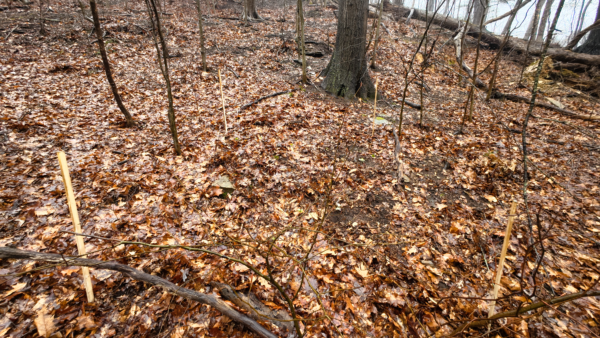
Upon completion of the botanical survey and relocation, CEC Geographic Information System (GIS) analyst Sara Small generated maps that depicted the locations of the population and relocation plots.
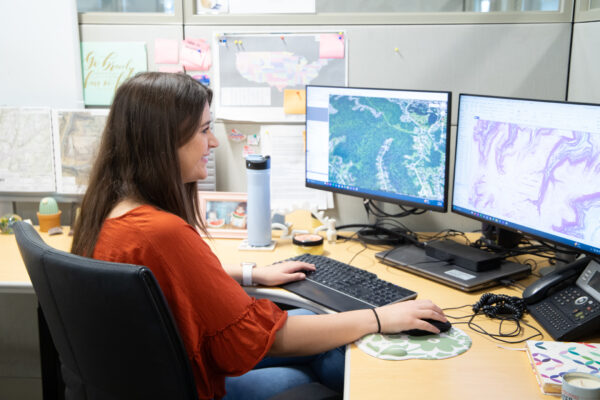 GIS Analyst Sara Small drafting maps for the botanical report. (Photograph by Emily Kins.)
Continuous Monitoring
The project permittee and CEC botanists will continue to monitor the Meehan’s mint for the next three years (2026-2028). During the monitoring, the project permittee and CEC will monitor the survival rates, reproductive success, and overall long-term population growth for the relocated species. Potential factors that could contribute to the use of additional adaptative management strategies include deer herbivory, invasive competition, or environmental stress.
This is the Way
During each botanical survey, relocation, and monitoring effort, CEC botanists review each project thoroughly and coordinate with each appropriate stakeholder, the project applicant, and the state or federal review agency. By carefully planning and executing, project timelines remain on schedule while simultaneously rare, threatened, and endangered species are successfully conserved for future generations.

Post a Comment