Owner/Client
Westervelt Ecological Service
Location
Summit County, CO
CEC Services
- Low-Tech Process Based Restoration
- Erosion & Sedimentation Control/NPDES Permitting
- Ecosystem Restoration
- Wetland Mitigation Design
- Two-Dimensional Hydraulic Modeling
- Water Quality & Quantity Modeling
- Watershed Planning and Restoration
- Aerial Photography/Videography
- Horizontal & Vertical Control Surveys
- LiDAR Surveys – Short and Long Range
- Mapping-grade Data Collection
- Photogrammetric and 3D LiDAR Topography
- Topographic Surveys
- Tree and Stream Surveys
- Unmanned Aerial Services
Owner Objective
Westervelt Ecological Services is a nationwide mitigation banker. They provide mitigation and conservation solutions across the U.S., restoring over 30,000 acres of habitats to benefit over 50 federally or state-protected species.
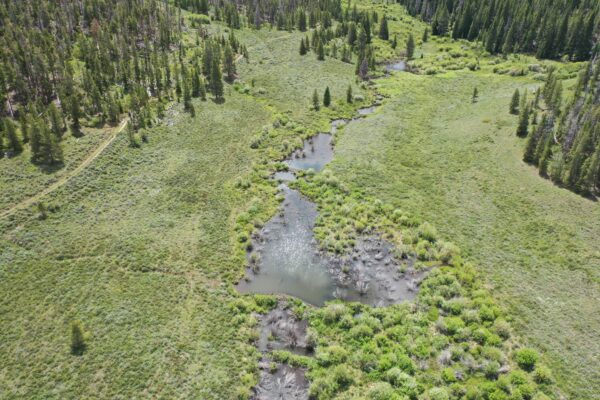
Westervelt has been awarded funding to generate up to 40 wetland credits for compensatory mitigation to offset Clean Water Act Section 404 impacts. Westervelt needed a leading resource designer for the project. The project is in a headwater system in the forests of Rocky Mountain National Park.
CEC Approach
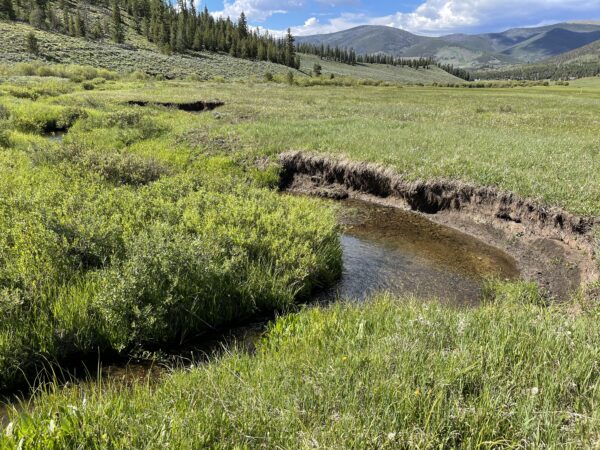
Westervelt engaged CEC since they are a full-service company and can implement all design and survey services in-house. CEC will implement a low tech process-based approach to restoration by designing beaver dam analog and post-assisted log structures throughout the entrenched stream system. By installing structures within the entrenched streams to the top of the banks, the stream channels will raise groundwater levels and flood over banks to reconnect with the historic floodplain. Water will naturally be retained on the floodplain creating a wetland habitat from valley wall to valley wall.
The outcomes of the project include passively re-establishing and enhancing approximately 40 wetland acres across the site to provide compensatory mitigation. Wetlands will be enhanced and re-established in the floodplain minimizing construction activity, while also providing an ideal habitat for aquatic and terrestrial organisms increasing overall structural and water quality. Additionally, the project will serve as a fire break due to the increased amount of groundwater, as well as serve as an irrigation source for the watershed. The project is in the regulatory approval progress and is anticipated to be constructed in 2023.