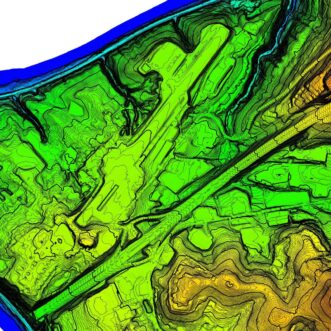
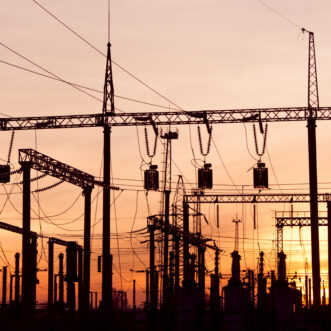
CEC’s team of registered professionals and survey staff use advanced technology and equipment to provide a full range of surveying/geomatics services. CEC delivers spatially referenced information that meets the specific needs of the power generation, transmission, and distribution industries.
CEC maintains an array of survey equipment, including RTK and static GPS, robotic and manual Total Stations, automatic and digital levels, and data collectors for conventional survey. CEC also utilizes unmanned aerial systems (UAS), terrestrial LiDAR scanners, and manned or remote-controlled bathymetric/hydrographic workboats.
Robust professional capabilities, specialized experience, and technical competence and capacity allow CEC to provide the following services to the power industry:
Horizontal/Vertical Control Surveys
CEC’s experience includes photogrammetric control; monitoring stations for dams, impoundments, site development, and earthwork; utility and roadway construction control; and waterway channel alignment.
Topographic Surveys
Various topographic techniques are employed depending on site characteristics and requirements, even in the most inaccessible areas. Topographic data can be collected using conventional survey techniques, survey-grade UAS, and/or terrestrial LiDAR scanning to create the appropriate base-mapping deliverable.
Construction Surveys
Capabilities include construction layout of surface/subsurface utilities, access roads, bridges, buildings, and parking lots. CEC also has experience in construction surveys of upland disposal sites, locks and dams, rivers, lakes, and canals.
Bathymetric/Hydrographic Surveys
CEC utilizes manned and/or remote-controlled workboats equipped with specialized remote sensing technology to map and quantify sedimentary deposits for determining the size and volume of ponds, lakes, and impoundments.
Boundary and Land Title Surveys
CEC is experienced in boundary and American Land Title Association (ALTA) surveys for areas up to thousands of acres.
Aerial Visual Inspections
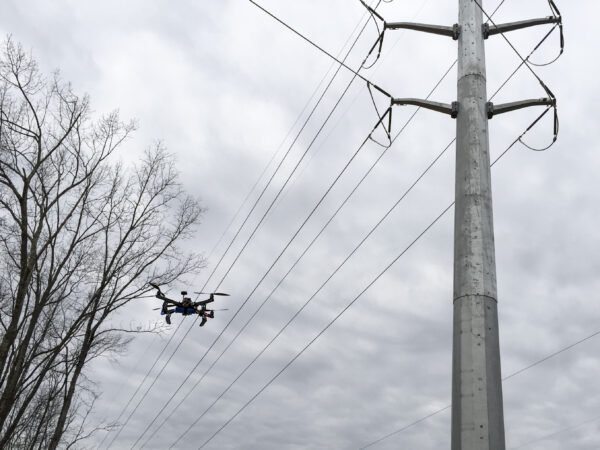 The ability to fly in close proximity to, and optically zoom in on, a target means that visual inspections of difficult-to-access areas like transfer station substations, dams, and power plants can be accomplished quickly and safely from a distance. The high-resolution and HD-quality visual images can then be downloaded and electronically transferred to a host of users.
Aerial Photography
Armed with the ability to capture 14 megapixel photos or record 1080p HD video from a unique vantage point, a typical UAS data file can contain 10 to 30 million points due to lower flight heights and high-resolution photographs compared to a conventional aerial survey data file that can contain up to 50,000 points. Aerial photographs can be used to display time-lapse project progress, monitor remote locations, or provide photography to be used in presentations, displays, or advertising.
Right-Of-Way Monitoring
UAS can be used to visually monitor rights-of-way for both overhead and underground utilities to determine if revegetation efforts have been successful; if there is evidence of earth movements such as slumps and slides, unauthorized construction, or storm damage; or if there is vegetative intrusion into overhead utility lines. UAS can be flown manually by an operator in visual contact with the UAS or pre-programmed to fly a specific flight path.
Thermal Imagery
UAS can be outfitted with infrared cameras capable of capturing thermal signatures from wastewater discharges from cooling towers, heat loss from buildings and equipment, groundwater seeps and springs, and other heat signatures.
LiDAR
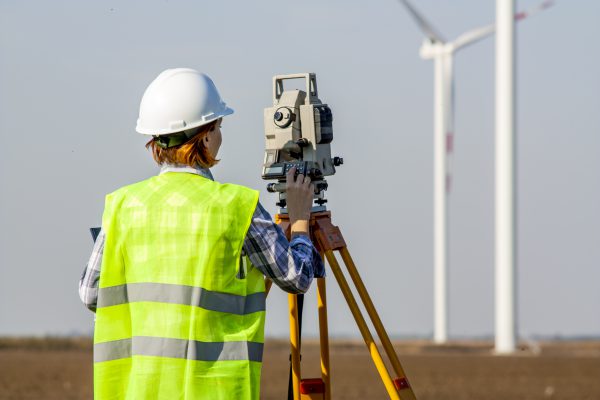 CEC utilizes the latest technology in ground-based 3D laser scanning with GPS to provide solutions to clients’ unique survey needs.
Using LiDAR, CEC can create an extremely detailed and dimensionally accurate 3D image using millions of acquired intelligent data points on a project site. Downloaded directly to a laptop at the site, LiDAR generates the 3D model in real time allowing immediate decision-making ability.
Mobilization of LiDAR
With ease of portability and setup, and decreased data processing and clean-up time, LIDAR scanning provides significant time savings versus traditional land surveying techniques. The use of LiDAR technology also enables increased safety by minimizing the need to send crews into dangerous spaces or high-traffic areas and roadways. Plus, the data can be revisited and new survey information can be retrieved based on client needs without remobilizing to the field.
Broad Application of LiDAR
Through the use of LiDAR, CEC can efficiently capture high-definition field data that enhance a broad range of land surveying and engineering projects from architectural and building surveying to industrial mapping of intricate sites and structures to forensics and accident reconstruction. Examples include:
- As-builts for architectural and commercial projects, industrial facilities, landfills, water treatment plants, power plants, electric substations, and oil and gas well pads and pipelines
- Horizontal and vertical clearances for roadways, bridges, and structures
- Detailed earthwork volumes and quantities
- Before-and-after dredging scans to calculate quantity for dry basins and ponds
- DOT surveys for traffic and highway structures, installations, and appurtenances
- Tunnel and mine scanning