In conjunction with a physical site inspection by a Registered Professional Engineer or Architect, Civil & Environmental Consultants, Inc. (CEC) utilizes unmanned aircraft systems (UAS) inspection media to develop a façade inspection report for submission to the City of Pittsburgh Department of Permits, Licenses, and Inspections.
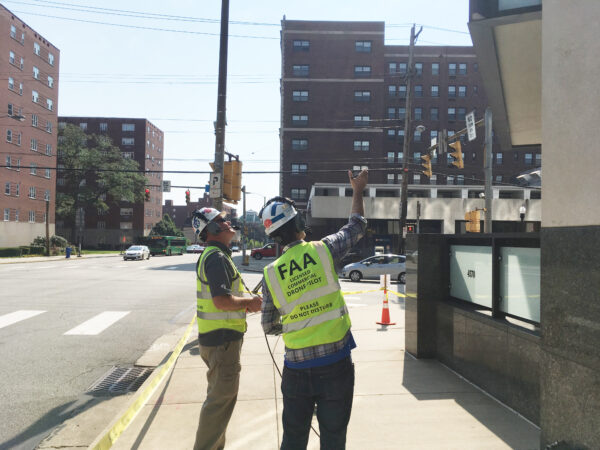
CEC obtained a Federal Aviation Administration (FAA) Section 333 Exemption and FAA Part 107 Pilot Certifications to operate UAS within the U.S. national airspace system for the purpose of conducting aerial data acquisitions. UAS inspection has low environmental impact and provides a safe, cost-effective solution that optimizes the quality and value of collected data. According to the Pittsburgh Property Maintenance Code, all buildings must submit to periodic inspections (typically every five years after the first inspection) except those structures classified by the International Code Council standard as “Group R-3,” which includes single-family residences and daycare or rooming house facilities with five or fewer residents.
The inspection must determine the structural soundness of the building, specifically encompassing:
- Decorative features, including cornices, belt courses, corbels, terra cotta trim, wall facings, and similar decorative features;
- Overhang extensions, including canopies, marquees, signs, metal awnings, fire escapes, standpipes, and exhaust ducts; and
- Chimneys and towers, including cooling towers, smokestacks, and similar appurtenances.

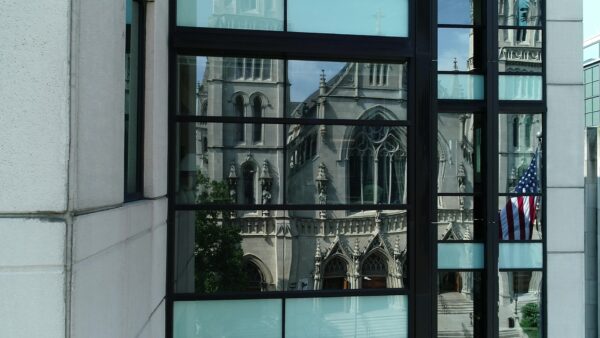
Such exterior features must be “maintained in good repair with proper anchorage and in a safe condition,” and, “when required, all exposed surfaces of metal or wood shall be protected from the elements and against decay or rust by periodic application of weather-coating materials, such as paint or similar surface treatment”(International Property Maintenance Code § 304.8, 304.9, 304.11, as referenced in Code of Ordinances, City of Pittsburgh, Pennsylvania § 1004.02 (Ord. 9-2004, eff. June 8, 2004)).
According to Property Maintenance Code implementation, a “licensed professional engineer or registered architect” must be retained to conduct the inspections, and “reports shall bear their signature and seal” (Title Ten, Chapter 1004: International Property Maintenance Code Adoption).