CEC provides specialized services related to the planning, site development and design, and/or analysis of waterfront structures used to transfer material goods in an operationally efficient manner between the shoreline and the water using appropriate equipment and specific infrastructure.
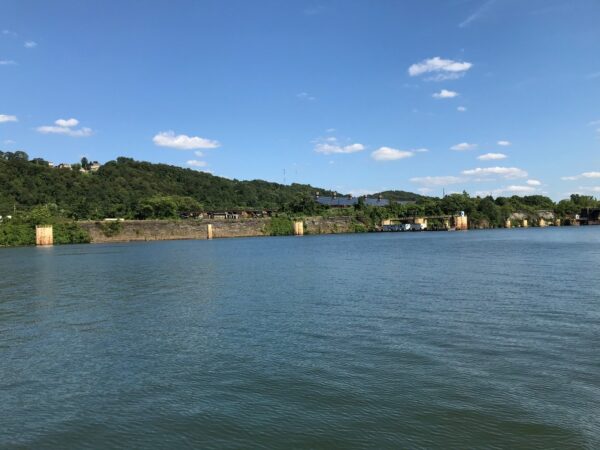
Waterfront facility owners who individually manufacture or generate large quantities of material goods by growing them off the land, by mining or pumping them from beneath the ground, or by manufacturing them at plants or mills, or owners who function as transportation brokers all need a means to cost-effectively transport/ship products from owner to customer. The cost to transport/ship these large quantities of materials by highway or by rail are not as cost effective as transporting materials by riverine methods. Studies conducted by the United States Army Corps of Engineers (USACE) indicate that the movement of bulk materials using over 1,000 large semi-trailers and tractors on highways or using over 200 rail cars and six locomotives on railroad tracks can be accomplished with one fleet of 15 barges on a river. However, to transfer these materials from land to water requires a specific infrastructure arrangement between the shoreline and the water, and it also requires the appropriate equipment to transfer the product.
Waterfront property owners may also wish to utilize their shorelines for non-industrial purposes. Recreational, retail, residential, and hospitality opportunities exist on the shorelines of inland rivers, lakes, and dam reservoirs.
CEC provides specialized civil, structural, geotechnical and hydrologic/hydraulic engineering, site reconnaissance capabilities, conditions assessment report preparation, ecological, permitting, and survey services related to the planning, site development and design, and/or analysis of waterfront structures used to transfer material goods in an operationally efficient manner. We’ve served more than a dozen clients in the mining, manufacturing, and real estate markets.
Pre-Design Services
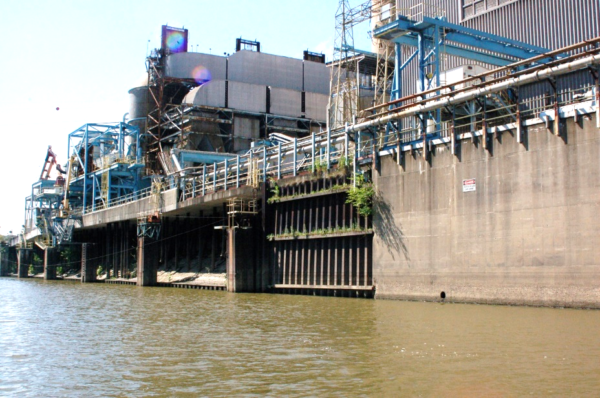 CEC’s approach to projects of this type consists of a series of pre-design tasks. Visual site reconnaissance of undeveloped areas from both landside and riverside (using one of two CEC specially outfitted boats) is performed to document physical conditions such as draft depths, shoreline erosion, unstable banks, or shoaling/sediment buildup in bottom areas. CEC will provide topographic and bathymetric mapping services and can generate mapping to be used for establishing a detailed plan of existing conditions.
Visual site reconnaissance of existing shoreline structures is performed to document conditions of wharves and quays, which are structures situated parallel to the shoreline that can extend for hundreds of feet. CEC evaluates the condition of continuous and cellular metal sheet pile walls, pipe piles, berthing, and mooring dolphins and concrete structures.
Engineering Services
CEC’s engineering services include the following:
- Geotechnical Engineering, Drilling Investigations, Soils Analysis, and Reporting
- Structural Engineering
- Closed Structure Pile or Sheet Pile/Tieback Design
- Open Structure Pipe Pile/Deck Design
- Live, Dead, and Surcharge Loading Analysis
- Civil Engineering and Site Development
- Site Grading
- Access Road Design
- Dredging
- Support Building Design
- Flood Routing, Scour Analysis, and Zero Rise Analysis
Permitting and Ecological Survey Services
At some facilities, the need to expand, rehabilitate, modify, or construct aboveground structures or to re-evaluate procedures for loading and offloading of materials onto barges or ships can prompt the need for procuring USACE permits or the performance of ecological tasks or aquatic surveys. CEC is well versed in the USACE permit process and is familiar with the Section 401/404, Section 408, and Section 10 application processes as well as the application process through the U.S. Fish and Wildlife Service. CEC also offers aquatic ecology monitoring (e.g., mussels, fish, rare and aquatic wetland plants, threatened & endangered species), topographic surveys, and bathymetric surveys.
Following site reconnaissance, CEC prepares a condition assessment report to present the findings and to provide conclusions and recommendations for rehabilitation, new construction, or no action.
Design Services
Design tasks vary based upon the conclusions and recommendations. CEC possesses the experience to perform geotechnical investigations, develop design parameters, and consult USACE Engineering Manuals (EMs) to rehabilitate or fully design quays and wharves, piers and jetties, mooring structures, and the associated landside infrastructure. Understanding that capital improvement costs are subtracted from the company’s bottom line, CEC’s design goes through a value engineering process, which includes information obtained from equipment operators and management of existing facilities, tug/barge operators (if possible) and, on occasion, a peer review to economize construction. In lieu of an open or closed fixed shoreline structure, CEC also provides design services for floating docks.