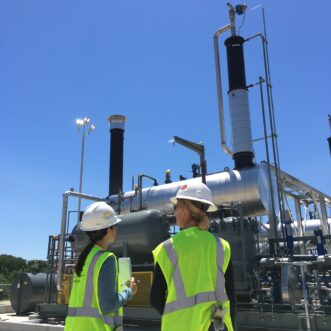
Owner/Client
Confidential
Location
Pennsylvania
CEC Services
- Aquatic & Terrestrial Habitat Surveys
- Threatened & Endangered Species Surveys/Wildlife Surveys
- Wetlands & Waters Delineations
- Phase I Assessments
- Cultural Resource Management
- GPS/GIS Services
Owner Objective
The client is a top tier renewable energy developer. The company has an exceptional track record in the development, construction, and operation of renewable energy facilities across the United States and worldwide. For this project, the client identified and secured land historically used for timber production to support a utility scale solar and battery storage facility. Comprehensive site constraint mapping was completed including evaluations of wetlands and waterways, potential habitats for rare, threatened, and endangered species, previously disturbed lands, and culturally sensitive areas to guide and optimize the project’s development strategy.
CEC Approach
CEC conducted a comprehensive desktop analysis of the nearly 15,000-acre site using geographic information system (GIS) technology to evaluate property boundaries, existing land cover, documented sensitive species, previously mapped archaeological resources, and other environmentally sensitive areas. Following this review, CEC performed a Phase I Environmental Site Assessment (ESA), delineated aquatic resources, and carried out surveys for rare, threatened, and endangered species.
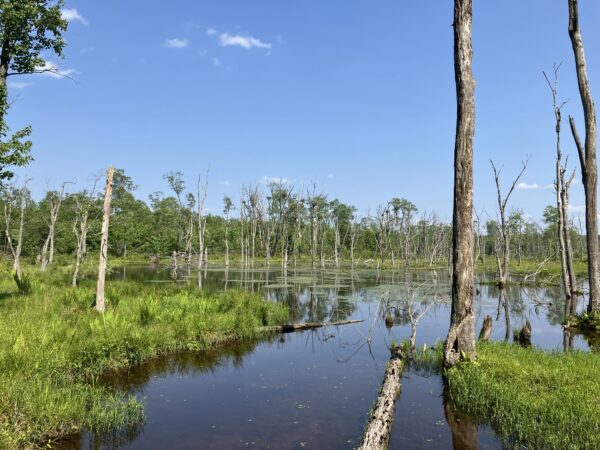
For the Phase I ESA, an experienced due‑diligence field team used GPS and GIS tools to identify areas of potential environmental concern, including the presence of gas wells, oil drums, and other indicators of environmental disturbance. Over the course of two growing seasons—approximately six months—multiple teams of CEC biologists delineated streams and wetlands within the project area in accordance with current U.S. Army Corps of Engineers guidance. These delineated resource locations will guide site development, with the goals of minimizing impacts to aquatic features and establishing effective state and federal permitting strategies.
 CEC biologists also conducted a habitat assessment to evaluate whether the site’s topography, vegetation,
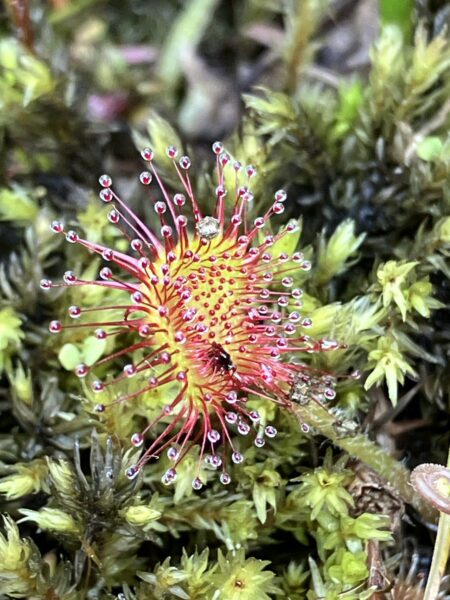 and geologic features could support suitable habitat for the timber rattlesnake (Crotalus horridus). Following this assessment, a permitted rattlesnake biologist prepared and submitted a report to the Pennsylvania Fish and Boat Commission. Additional state‑listed species—including the blue‑spotted salamander (Ambystoma laterale), bigmouth shiner (Notropis dorsalis), and burbot (Lota lota) continue to be evaluated to inform potential site layout. The U.S. Fish and Wildlife Service’s Pennsylvania Field Office identified that the project area intersects a known northern long‑eared bat (Myotis septentrionalis) buffer.
CEC is assisting the client through the federally listed species consultation process during site planning and development. This work may include, but is not limited to, bat acoustic and mist‑net surveys, preparation of a Bat Conservation Plan, and development of a Biological Assessment for U.S. Fish and Wildlife Service review in support of their Biological Opinion.