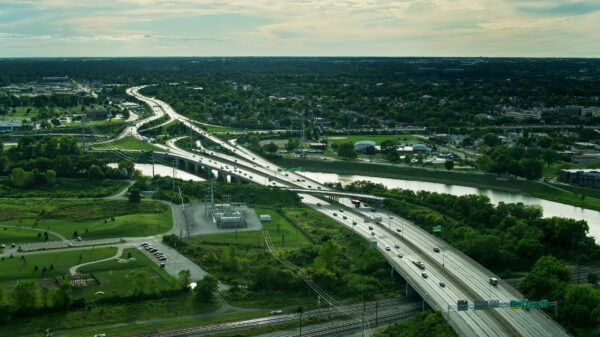
From Interstate 70 to state routes to daily commutes through growing suburbs,Ohio’s transportation network is something most people interact with instinctively. Roads are driven, ramps are taken, traffic slows or speeds up, and life moves on.


Behind those everyday experiences are CEC engineers like Bryan Bender, P.E., and Kathryn Gruver, P.E., who have spent decades working within Ohio’s specific conditions. They know its interstate corridors, its local roads, its mix of rural stretches and dense suburban growth.
That long familiarity shapes how transportation projects are approached at CEC. Experience isn’t just about years in practice. It’s about knowing how Ohio roads behave, how trucks move through the state, and how design decisions hold up long after construction crews leave.
When Short Projects Have Outsized Impact
Not every impactful project is long or highly visible. A state route realignment in Mason, Ohio, is one such example. While limited in length, the project addressed a significant traffic issue that had frustrated drivers for years.
As Bryan, a Senior Project Manager in the Cincinnati office, describes it, the project stood out not because of its size, but because of what it accomplished. “It wasn’t a huge project lengthwise, but it addressed a huge traffic issue. It took a 4-way intersection with long traffic delays and made it better.”
For engineers, success like this is often measured long after a project is finished. In this case, the results are visible at each pass. “Honestly, I drive through it every day,” he adds.
Traversing a completed project regularly offers a clear test of whether the design choices made on paper translate to real-world performance.
Designing for Ohio’s Truck Traffic
Ohio’s role as a freight corridor means truck traffic is a constant consideration in roadway design. A major rest area and truck stop project along I‑70 east of Columbus illustrates how that reality influences engineering decisions.
One key challenge was truck acceleration. Trucks leaving the facility were traveling uphill and needed to merge back onto the interstate before reaching a nearby bridge, without enough distance to build speed safely. The solution was a large looping ramp system that let trucks accelerate gradually before re-entering highway traffic. “You don’t want trucks merging at 30 miles an hour,” Bryan says of the project he designed.
The design may look unconventional at first glance, but it reflects a practical understanding of truck performance and safety on Ohio’s heavily traveled interstates.
Crossing Disciplines When Projects Demand It
Transportation projects involve more than just roadway design. Drainage is often a critical piece, particularly on larger or more complex projects. Kathryn, a Principal in CEC’s Cincinnati office, has spent much of her career working within ODOT’s drainage standards, including Location & Design Volume 2, the department’s Drainage Design Manual.
“I’ve worked extensively on drainage design for ODOT projects,” Kathryn says. “It’s an area where details matter, and small decisions can have long‑term effects.”
Her experience includes serving as the Lead Drainage designer on FRA-161, HAM-71, HAN-75, TRU-70 and the Independent Quality Firm drainage reviewer for a design‑build project involving 17 miles of new roadway in Portsmouth, Scioto County, where her role focused on reviewing drainage design for compliance and performance under Ohio conditions.
The Quiet Work of Reviewing and Checking
Not all transportation work results in something drivers immediately recognize. Plan and structure reviews, such as bridge plan reviews, focus on verifying completeness and consistency before projects move forward.
Bryan is CEC’s designated bridge reviewer in the state of Ohio. This type of work relies less on big design moves and more on familiarity with where issues tend to emerge, particularly within Ohio’s standards and agency expectations.
Experience Rooted in Place
With engineers based throughout Ohio in offices in Cincinnati, Columbus, and Toledo, much of CEC’s work is shaped by long-term familiarity with local roads, state routes, and interstate systems. Over time, that experience influences how problems are identified and how solutions are evaluated.
Transportation infrastructure rarely draws attention when it works as intended. For engineers who’ve spent years shaping Ohio’s roads and bridges, that’s often the goal. If traffic flows, trucks merge safely, and the road does what drivers expect it to do, the project has done its job.



Post a Comment